One hundred and seven years ago, a thunderclap echoed through the streets of Beijing, forever altering the trajectory of the Chinese spirit. It was the spring of 1919—a moment of profound national crisis and intellectual rebirth known as the May Fourth Movement. On that day, a generation of young students and thinkers stood up to reject the shadows of imperial tradition and colonial humiliation. They did not merely demand the return of territory; they demanded a new way of being. They called for the arrival of two personified ideals: “Mr. Democracy” and “Mr. Science.”
To understand May Fourth is to understand the “Discovery of the Individual.” For millennia, the people were viewed as mere subjects of an empire—cogs in a vast, dynastic machine. May Fourth shattered that mold. It argued that a nation’s strength is hollow if it is built upon the suppression of its people. It posited a radical truth: that a truly modern civilization is one where the individual is an end in himself, not a means to a state-defined end.
Democracy, in this light, is not a gift bestowed from above; it is the ultimate expression of human dignity.
It is the right to speak one’s truth without fear, to participate in the shaping of one’s destiny, and to ensure that the “will of the people” is more than a hollow slogan used to justify absolute power.
However, history has taught us that passion alone is a fragile shield. If democracy is the heart of a free society, then the Rule of Law is its backbone.
For the international observer, it is vital to distinguish between “Rule by Law” and the “Rule of Law.” The former is a tool of autocracy—using legislation to regulate and discipline the populace. The latter, which the pioneers of May Fourth fitfully sought, is the limitation of power. True Rule of Law means that no entity, no matter how powerful, is above the civilian contract. It is the guarantee of due process, the independence of the judiciary, and the protection of the minority against the “tyranny of the urgent.” Without the Rule of Law, freedom is but a candle in a gale.
“When a power is not held in check, dignity has no place to rest.”
Today, as we navigate the complexities of 2026, the spirit of May Fourth feels more urgent than ever. We must be wary of “grand narratives” that seek to erase the value of the individual. True patriotism does not consist of blind obedience to the state, but in the courage to make the state more worthy of its people’s love. This is achieved through the persistent defense of common sense, the protection of truth, and the quiet, firm refusal to accept injustice as “inevitable.”
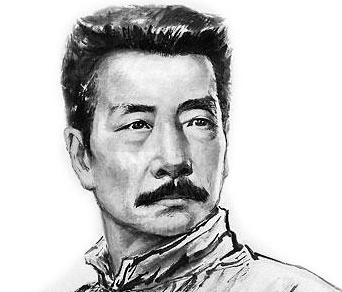
As the great writer Lu Xun once urged the youth: “May the Chinese youth shed their coldness and simply move upward… if there is no light, be the only light.”
To honor the May Fourth Movement is not to perform a ritual of the past, but to commit to a journey that is far from over. It is to build the altars of democracy and the foundations of law within our own hearts. It is to ensure that the torch lit a century ago does not become a distant ember, but a guiding light toward a future where every citizen can live with dignity, protected by a law that serves justice, and a democracy that honors the human spirit.
Key Interpretations for Context:
- “Mr. Democracy” & “Mr. Science” (德先生与赛先生): These are iconic personifications used by early 20th-century Chinese reformers. “Science” referred not just to technology, but to a “scientific” or rational mindset that rejects superstition and blind dogma.
- The Shift from “Subject” to “Citizen” (从臣民到公民): This highlights the transition from a Confucian imperial hierarchy (where people owe loyalty to the Emperor) to a Republic (where the state serves the people).
- Lu Xun (鲁迅): Mentioning him adds weight, as he is China’s most celebrated modern literary figure, known for his searing critiques of the “national character” and his call for youth to be independent thinkers.
 Shao Suyang's Blog
留下评论